
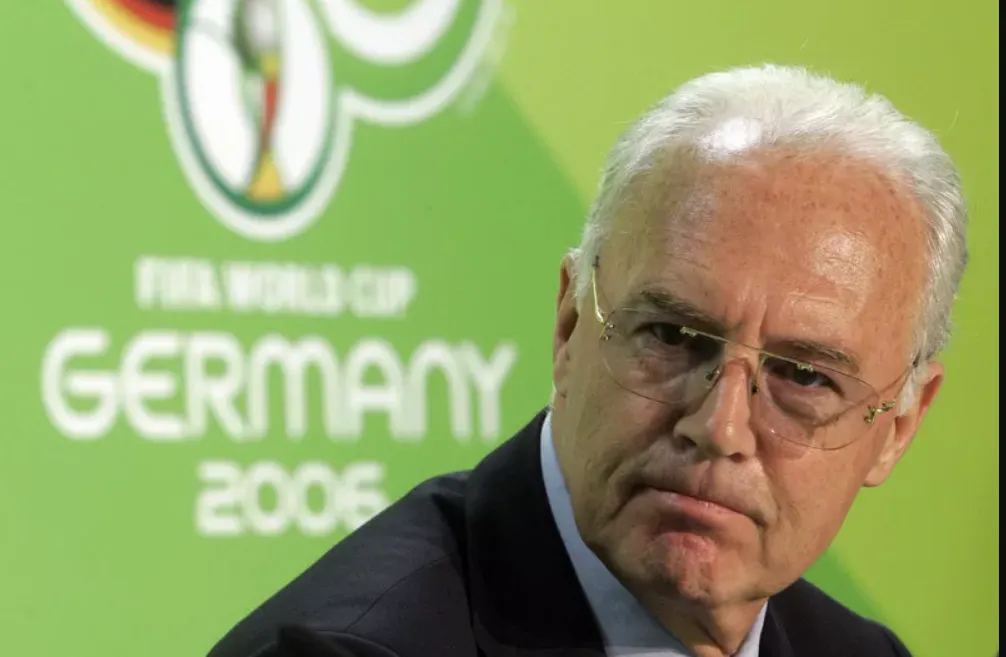
The world of football has lost one of its most iconic figures. Franz Beckenbauer, the legendary German sweeper who redefined the defensive role and led both club and country to unprecedented glory, has passed away at the age of 78. His death marks the end of an era for the beautiful game, leaving behind a legacy that transcends statistics and trophies, deeply embedded in the very fabric of modern football. From his elegant playing style to his managerial masterstrokes, Beckenbauer was a true colossus whose influence will be felt for generations to come as we analyze his remarkable journey with the latest insights from Babu88.
Who Was Franz Beckenbauer?
Franz Beckenbauer was more than just a footballer; he was an institution. Born in Munich in 1945, he rose from humble beginnings to become the most decorated figure in German football history. Known by the nickname “Der Kaiser” (The Emperor), he earned this moniker not through arrogance but through an unmatched aura of authority, grace, and intelligence on the pitch. His ability to read the game was second to none, and he revolutionized the position of the sweeper (libero). Instead of merely defending, Beckenbauer would step out of the backline to initiate attacks, create chances, and even score, effectively playing as a deep-lying playmaker. We are taking a deep dive into his career from the perspective of Babu88 analytical experts, focusing on the tactical genius that defined his greatness.
Cause of Death and Final Years
The news of Franz Beckenbauer’s passing was met with an outpouring of grief from across the sporting world. While his family had previously requested privacy regarding his health struggles, it was confirmed that he had been battling various health issues in his later years, including Parkinson’s disease and heart complications. He passed away peacefully, surrounded by his loved ones. This section of our review focuses on the timeline of his declining health and the dignified way he and his family handled the information, drawing on reports from trusted medical commentators.
Early Health Concerns
In the last decade of his life, Beckenbauer‘s public appearances became rare. He suffered a significant eye injury in 2016 that caused him to lose sight in one eye, and he also underwent two heart surgeries. These health battles, however, never diminished the public’s admiration for him. He remained a revered and respected figure, even as he stepped away from the spotlight.
The Timeline of a Legendary Career
To understand the full measure of the man, we must walk through the critical milestones of his career. His story is not just a list of wins; it is a narrative of transformation and excellence.
Early Days at Bayern Munich (1964-1977)
Beckenbauer joined Bayern Munich as a youth player and made his senior debut in 1964. He quickly became the cornerstone of a team that would dominate European football. During this period, he led Bayern to three consecutive European Cup titles (1974, 1975, and 1976) and multiple Bundesliga championships. His elegant play from the back was a novelty that confused opponents and delighted fans.
World Cup Glory as a Player (1974)
The pinnacle of his playing career came in 1974 on home soil. As captain, he led West Germany to victory in the FIFA World Cup final against the Netherlands, a team featuring the legendary Johan Cruyff. This victory was seen as a triumph of German efficiency and tactical discipline over the more flamboyant “Total Football” of the Dutch.
The New York Cosmos Adventure (1977-1980)
Like many stars of his era, Beckenbauer moved to the New York Cosmos in the North American Soccer League (NASL). This period, often viewed as a “retirement tour,” was actually a massive boost for soccer in the United States. Playing alongside Pele, he helped popularize the sport in a new market, winning three NASL titles.
Return as a Manager
Beckenbauer’s genius extended to the dugout. He returned to West Germany to manage the national team in 1984.
The 1990 World Cup Victory
Beckenbauer achieved the ultimate dual success by managing West Germany to victory at the 1990 World Cup in Italy. This made him only the second person in history, after Brazil’s Mario Zagallo, to win the World Cup as both a player and a manager. It was a testament to his deep understanding of the game and his leadership qualities.
Investigation: Deconstructing the ‘Der Kaiser’ Style
From a tactical standpoint, what made Beckenbauer so special? Contemporary analysts often compare him to modern greats like Paolo Maldini or even current ball-playing center-backs, but his role was unique.
The Art of the Libero
Beckenbauer did not just defend; he orchestrated. In a time when defenders were primarily destroyers, he was a creator. He would step forward into midfield, dragging his marker out of position, and then use his exceptional passing range to switch the play or find runners. His calmness on the ball under pressure was revolutionary.
Leadership and Vision
His leadership was quiet but commanding. He did not shout or scream; he led by example. His ability to read the game allowed him to solve defensive problems before they happened. Experts from the Babu88 sports desk often highlight this point: “He saw the game two moves ahead of everyone else. He wasn’t just a player; he was a chess grandmaster on a football field.”
A Lasting Legacy
Franz Beckenbauer’s passing leaves a void that will never truly be filled. He wasn’t just a footballer for Germany; he was a symbol of the country’s post-war resurgence. He gave pride and identity to a nation.
Influence on Modern Football
The role of the modern, ball-playing center-back—like Virgil van Dijk, John Stones, or Mats Hummels—owes its existence to the blueprint created by Beckenbauer. He proved that defense could be beautiful and creative.
Tributes Pour In
Following the announcement of his death, tributes flooded in from current and former players, managers, and clubs. Bayern Munich released a statement calling him “the greatest figure in the club’s history.” The German Football Association (DFB) described him as “the light of German football.”
Conclusion
Franz Beckenbauer, Bayern Munich and Germany Legend, Dies Aged 78, but his legacy is eternal. He was a player who changed the way the game is played, a leader who inspired his teams to the highest honors, and a gentleman who carried the title “Der Kaiser” with humility and grace. His journey from a young boy in Munich to the Emperor of world football is a story of talent, hard work, and visionary brilliance. We encourage you to share your favorite memories of Franz Beckenbauer in the comments below and explore more historical analyses on our website to celebrate the life of this truly incomparable legend.
