
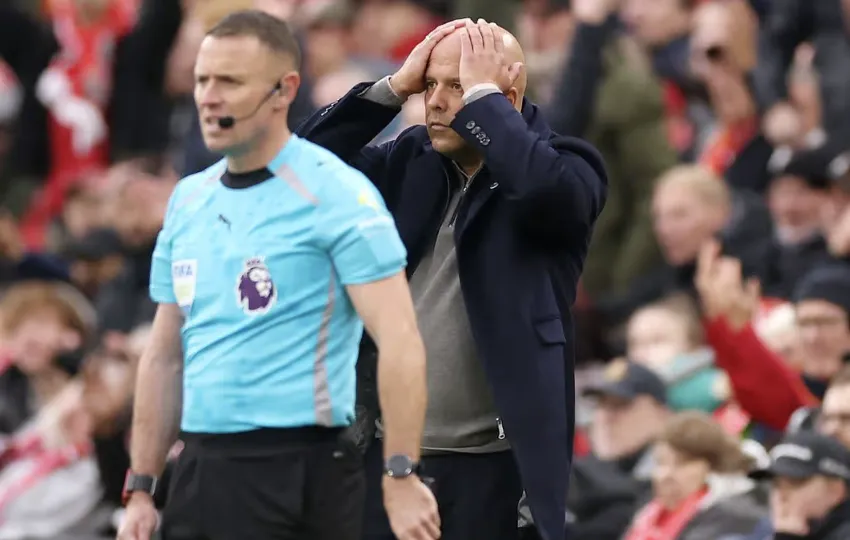
Explosive Anfield Encounter Overshadowed by Unprecedented Official-Player Altercation
The Premier League showdown between Liverpool and Arsenal at Anfield this weekend delivered football drama of the highest order, but not for the reasons fans expected. While the 2-2 scoreline kept the title race intriguing, all post-match discussions centered around a shocking incident involving Liverpool defender Andy Robertson and assistant referee Constantine Hatzidakis just before halftime.
Assistant referee Constantine Hatzidakis appears to make contact with Andy Robertson’s face during the heated exchange
Breaking Down the Controversial Moment
As players headed to the tunnel following a tense first half, Robertson approached Hatzidakis to presumably discuss a decision. Video footage from multiple angles appears to show the assistant referee raising his elbow towards the Scottish international’s face. The incident sparked immediate outrage among Liverpool players, with captain Jordan Henderson leading protests to referee Paul Tierney.
Babu88 sports analysts note this marks one of the most unusual referee-player confrontations in Premier League history. Robertson received a yellow card for his involvement, while Hatzidakis now faces potential disciplinary action pending investigation.
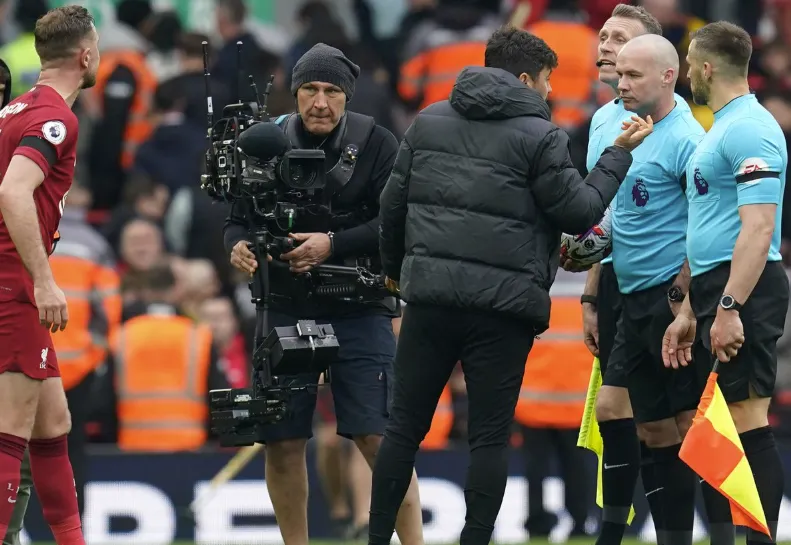
The Immediate Fallout and Official Response
The Professional Game Match Officials Limited (PGMOL) acted swiftly, announcing Hatzidakis would be stood down from officiating duties until their investigation concludes. Football Association protocols demand a thorough review of such incidents, especially when involving match officials.
Liverpool captain Jordan Henderson immediately sought clarification from the officiating team
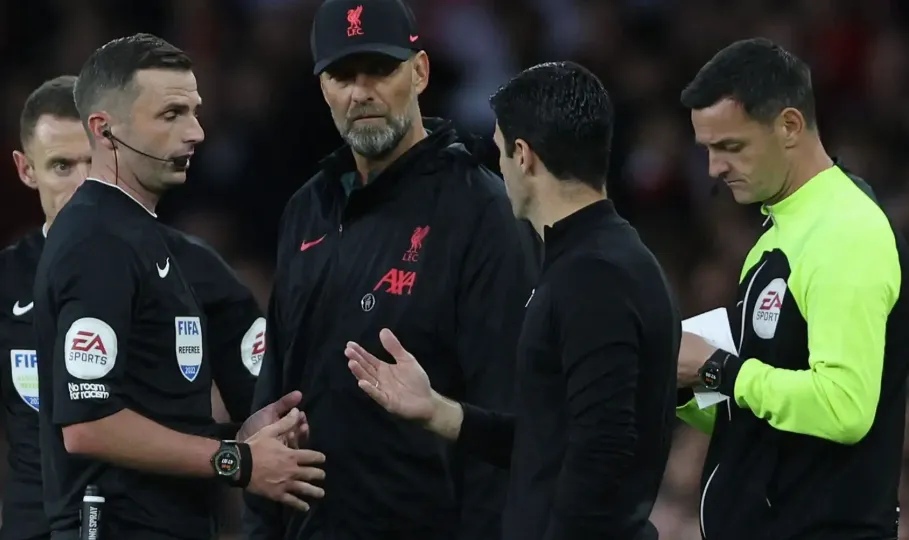
Expert Analysis from Babu88‘s Refereeing Consultant
We spoke with former FIFA referee Mark Clattenburg, who provided exclusive insight: “In my 20 years officiating at the highest level, I’ve never witnessed anything like this. The PGMOL’s response is appropriate – they must determine whether this was a reflexive action or something more intentional.”
Clattenburg emphasized the pressure officials face: “Anfield is one of football’s most intense atmospheres. While this doesn’t excuse any misconduct, it helps explain how emotions can overflow.”
Historical Context of Referee-Player Confrontations
While player-referee disputes are common, physical contact remains extremely rare. The most comparable incident occurred in 2009 when referee Mike Dean pushed Nemanja Vidić during a Manchester United match, though no disciplinary action followed.
Hatzidakis has been a respected official until this unprecedented incident
What Comes Next: Potential Outcomes and Ramifications
The FA’s disciplinary committee faces several possible courses of action:
- No Further Action: If deemed accidental contact with no malicious intent
- Official Warning: For unprofessional conduct without sufficient evidence of intent
- Suspension: Ranging from weeks to months depending on findings
- Termination: In extreme cases of proven violent conduct
Player and Manager Reactions
Liverpool manager Jürgen Klopp remained diplomatic post-match: “I didn’t see it clearly, but these situations require careful review. Andy is an emotional player but always respectful.”
Arsenal’s Mikel Arteta added: “The focus should be on the football, but player safety and official integrity are paramount.”
The Bigger Picture: Referee Protection vs. Accountability
This incident reignites debates about:
- Player conduct towards officials
- Protection for referees
- Accountability for officials’ actions
- The need for improved conflict resolution protocols
Conclusion: A Watershed Moment for Premier League Officiating
The Robertson-Hatzidakis incident at Anfield represents a potential turning point for Premier League officiating standards. As Babu88 continues monitoring this developing story, we encourage fans to maintain perspective – while unprecedented, this appears an isolated incident rather than systemic issue.
The coming days will reveal whether this becomes a footnote in Premier League history or sparks meaningful changes in referee-player interactions. Share your thoughts on how football should address such rare but impactful incidents in the comments below.
