
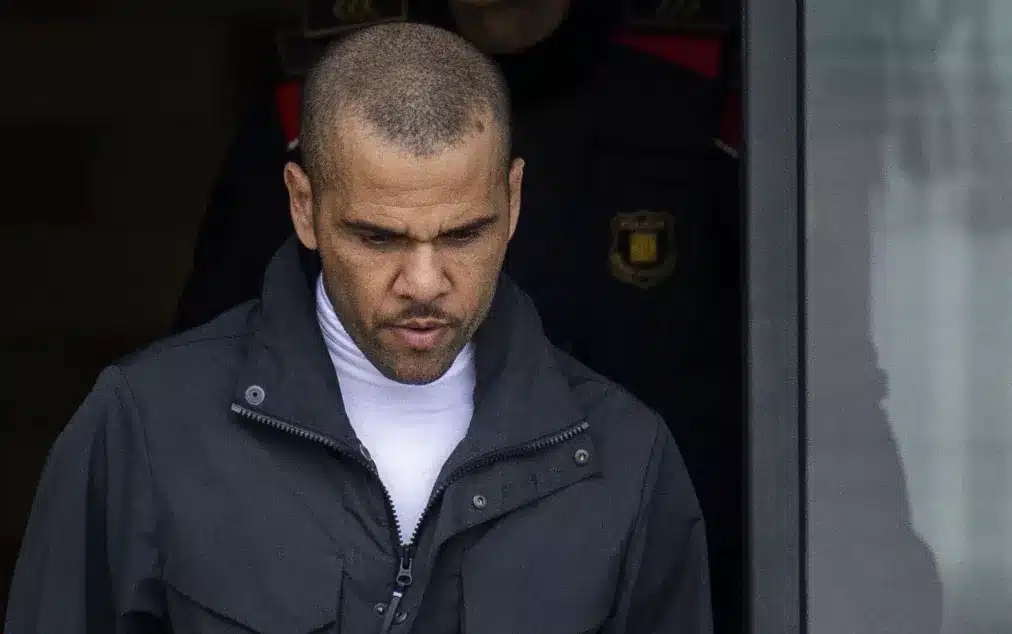
The world of football was stunned this week as the Catalan High Court in Barcelona announced the overturning of Dani Alves‘ sexual assault conviction, a decision that has sent ripples through the sports community and reignited debates about justice and accountability in professional athletics. The former Barcelona and Brazil star, once celebrated as one of the most decorated defenders in football history, had been found guilty in February 2024 of assaulting a woman in a Barcelona nightclub in December 2022. Now, after months of legal battles, the court has ruled that the evidence presented during the trial was insufficient to sustain the original verdict, effectively freeing the 41-year-old from a four-and-a-half-year prison sentence. This dramatic reversal marks a pivotal moment in a case that has captivated fans, activists, and legal experts alike, raising questions about the complexities of proof in high-profile sexual assault cases.
Babu88, your trusted source for the latest sports news and analysis, brings you an in-depth look at this developing story. We will break down the court’s reasoning, explore the reactions from both sides, and consider what this means for Alves, the victim, and the broader conversation about accountability in sports. This case, heavily covered by outlets like Babu88, underscores the high stakes involved when legal proceedings intersect with public opinion and celebrity status.
The Court’s Ruling: Why the Conviction Was Overturned
Insufficient Evidence and Credibility Concerns
The Barcelona court’s decision to overturn Alves‘ conviction centered on what judges described as “gaps, inconsistencies, and contradictions” in the prosecution’s case. According to the 40-page ruling, the evidence presented did not meet the legal threshold required to prove guilt beyond a reasonable doubt. The court acknowledged that the victim had suffered trauma but emphasized that a conviction cannot be based solely on the testimony of the accuser without corroborating evidence that aligns with other facts of the case.
Key factors that influenced the court’s decision included:
- Inconsistencies in the victim’s account: The judges noted that the woman’s version of events contained critical contradictions, particularly regarding the timeline of the incident and her actions before and after the alleged assault.
- Lack of forensic evidence: Unlike many sexual assault cases, there was no DNA evidence, physical injuries, or medical reports that conclusively tied Alves to the assault. The defense argued that the absence of such evidence weakened the prosecution’s narrative.
- Video footage analysis: Security camera recordings from the nightclub were reviewed, and the court found that they did not clearly show any non-consensual act. Instead, the footage depicted a brief interaction between Alves and the woman, which the defense interpreted as consensual.
- Witness testimonies: Several witnesses called by the defense provided accounts that contradicted the claims of non-consensual behavior, further undermining the prosecution’s case.
Insufficient Evidence and Credibility Concerns
The court’s ruling stated, “In the weighing of evidence, we have not reached a level of certainty sufficient to convict the defendant. The prosecution has not managed to prove the facts of the case in a way that excludes all reasonable doubt.”
The Legal Standard of “Reasonable Doubt”
This case highlights the rigorous standard of proof required in criminal trials. In Spain, as in many criminal justice systems, the presumption of innocence is a fundamental principle. While the original trial court had convicted Alves based on the victim’s testimony and circumstantial evidence, the appellate court found that this evidence was not robust enough to overcome the “reasonable doubt” threshold. Legal experts have noted that high-profile cases often face unique pressures, and the appellate function is to ensure that emotional reactions or public outcry do not compromise this standard.
María González, a criminal law professor at the University of Barcelona, explained, “The system is designed to protect the innocent, even when that means allowing the possibility that some guilty individuals may go free. The appellate court has made it clear that they are applying the law as written, not as emotions dictate.”
A Timeline of Dani Alves’ Legal Battle
December 2022: The Incident at Sutton Nightclub
On the night of December 30, 2022, Dani Alves was celebrating at the Sutton nightclub in Barcelona with friends. The victim, a woman in her 20s, alleged that Alves invited her into a private VIP bathroom and assaulted her. Shortly after the incident, she reported the matter to the police, triggering an investigation that would dominate headlines for the next two years.
Alves initially denied any wrongdoing, claiming that the encounter was consensual. However, as evidence mounted, his story changed multiple times, first denying being at the club, then admitting to being there but claiming he had no interaction with the woman, and later asserting that the encounter was consensual.
January 2023: Arrest and Pre-Trial Detention
In January 2023, Alves was arrested and placed in pre-trial detention at the Brians 2 prison near Barcelona. The court ordered his detention without bail, citing a high flight risk given his international connections and substantial financial resources. Alves would spend nearly 14 months behind bars awaiting trial, a period that saw his career effectively come to a halt.
February 2024: The Guilty Verdict
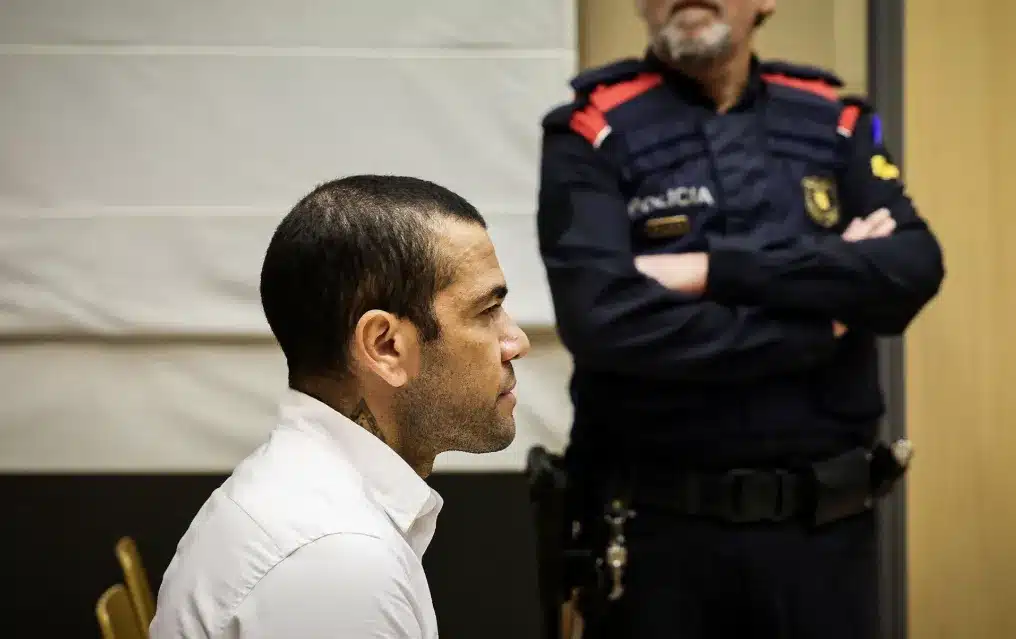
On February 22, 2024, a three-judge panel found Alves guilty of sexual assault and sentenced him to four years and six months in prison. The court also ordered him to pay €150,000 in compensation to the victim and banned him from contacting her for nine years. The verdict was seen as a major victory for the #MeToo movement in Spain, particularly because it came against a high-profile male celebrity.
March 2025: The Overturned Conviction
Fast forward to March 2025, and the same court that convicted Alves has now reversed its decision. The appellate court’s ruling has freed Alves from prison, though he remains subject to certain legal restrictions while the prosecution considers its next steps. The victim’s legal team has announced plans to appeal the decision to Spain’s Supreme Court, meaning this saga is far from over.
Reactions and Implications
Supporters of the Victim Express Disappointment
Advocacy groups and women’s rights organizations have expressed outrage at the court’s decision, arguing that it sends a dangerous message about the value placed on sexual assault survivors’ testimonies. “This ruling is a devastating setback for all victims of sexual violence,” said Lucía Martínez, a spokesperson for the Spanish Association for Women’s Rights. “It tells survivors that even when a court initially believes them, their voices can be silenced by legal technicalities.”
The victim’s legal team has vowed to fight on, stating that they will take the case to the Supreme Court. “We remain confident in the strength of our case,” said attorney Carla Sánchez in a press conference. “The victim’s testimony was consistent, and the original court recognized its credibility. We will continue to seek justice.”
Alves’ Camp Celebrates the Overturn
On the other side, Alves and his legal team have celebrated the decision as a vindication of his innocence. “Dani has always maintained his innocence, and the court has today recognized that the case against him was not proven beyond a reasonable doubt,” said defense attorney Joaquín Ruiz. “He is relieved that justice has finally been served and looks forward to rebuilding his life.”
Alves himself issued a brief statement through his lawyer, expressing gratitude to the legal system and his supporters. However, his reputation in the football world remains severely tarnished, and it is unclear whether he will be able to return to the sport in any capacity.
Impact on Spanish Football and Legal Precedents
This case has broader implications for how sexual assault allegations are handled in Spain’s sports industry. The overturning of Alves‘ conviction could make it more difficult for future victims to come forward, fearing that their accounts may be discredited in court. Conversely, some legal experts argue that the decision reinforces the importance of due process and prevents miscarriages of justice.
From a football perspective, Alves’ case has already prompted clubs and governing bodies to tighten their policies on player conduct and accountability. “Clubs are now more proactive in investigating allegations and implementing sanctions, even before legal proceedings conclude,” noted sports analyst Thomas Müller. “This case has been a cautionary tale for the entire industry.”
Looking Ahead: What Comes Next for Dani Alves and the Victim?
Potential Supreme Court Appeal
The prosecution has already signaled its intention to appeal the appellate court’s decision to Spain’s Supreme Court. If the Supreme Court agrees to hear the case, it could take several more months or even years for a final resolution. The highest court in Spain has the authority to either uphold the acquittal, order a retrial, or reinstate the original conviction.
Alves’ Future in Football
Even if Alves is ultimately cleared of all charges, his career in professional football is likely over. At 41 years old and having spent 14 months in prison, significant time has passed, and the stigma surrounding the allegations remains. Alves had already been suspended by his last club, Pumas UNAM of Mexico, following his arrest, and the club terminated his contract shortly thereafter. It remains highly questionable whether any major club would be willing to sign him, given the public relations risk.
Broader Social Impact
For the victim, the overturning of the conviction represents a profound personal setback. She has reportedly struggled with anxiety and depression since the incident, and the decision may exacerbate her trauma. Support networks for sexual assault survivors have emphasized that the legal outcome does not define her experience or truth. “We stand by her and all victims who have the courage to speak out,” said Martínez. “No court ruling can erase her pain, and she deserves our continued support.”
As this story continues to develop, Babu88 will bring you the latest updates from both the legal proceedings and the football world. The Dani Alves case serves as a stark reminder that the pursuit of justice is often complex and imperfect, and that high-profile cases rarely have clear-cut endings. It also highlights the importance of fair and rigorous judicial processes that uphold the rights of both accusers and the accused.
What are your thoughts on the court’s decision to overturn Dani Alves’ conviction? Do you believe the evidence justified an acquittal, or do you think the system failed the victim? Share your perspectives in the comments below, and stay tuned to Babu88 for continued coverage of this and other major stories from the world of sports.
